
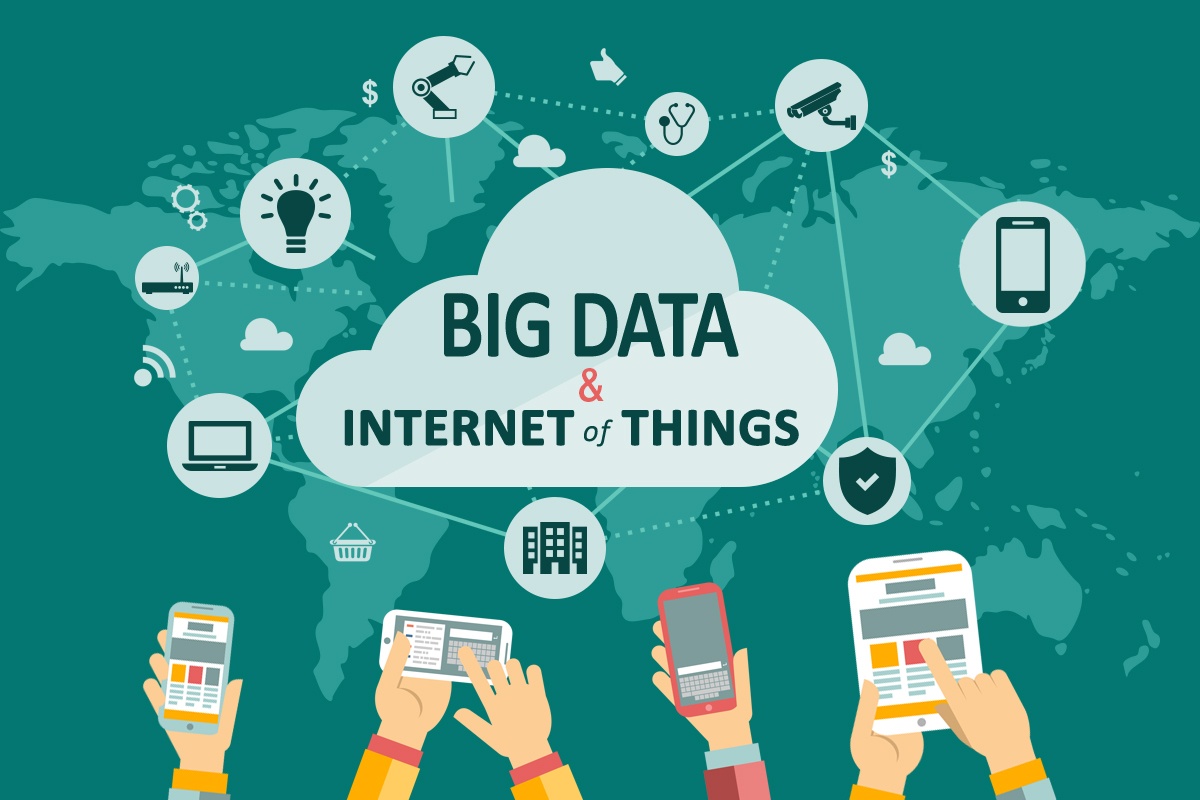

These days, we mortals depend heavily on the dimension of Big Data to lead our daily activities regardless of the time and place. This also means leaving digital footprints whenever, wherever.
“From dawn of civilization until 2003, humans created 5 exabytes of data.”
Eric Schmidt – Ex CEO Google 2010
This is almost equivalent to 5,000,000,000,000 megabytes and you guessed it, we are now creating that much every 2 days.
So is this thread of footprints traceable? Is it dangerous?

It could be.
Have you ever wondered how much data is being transmitted every minute on the Internet?
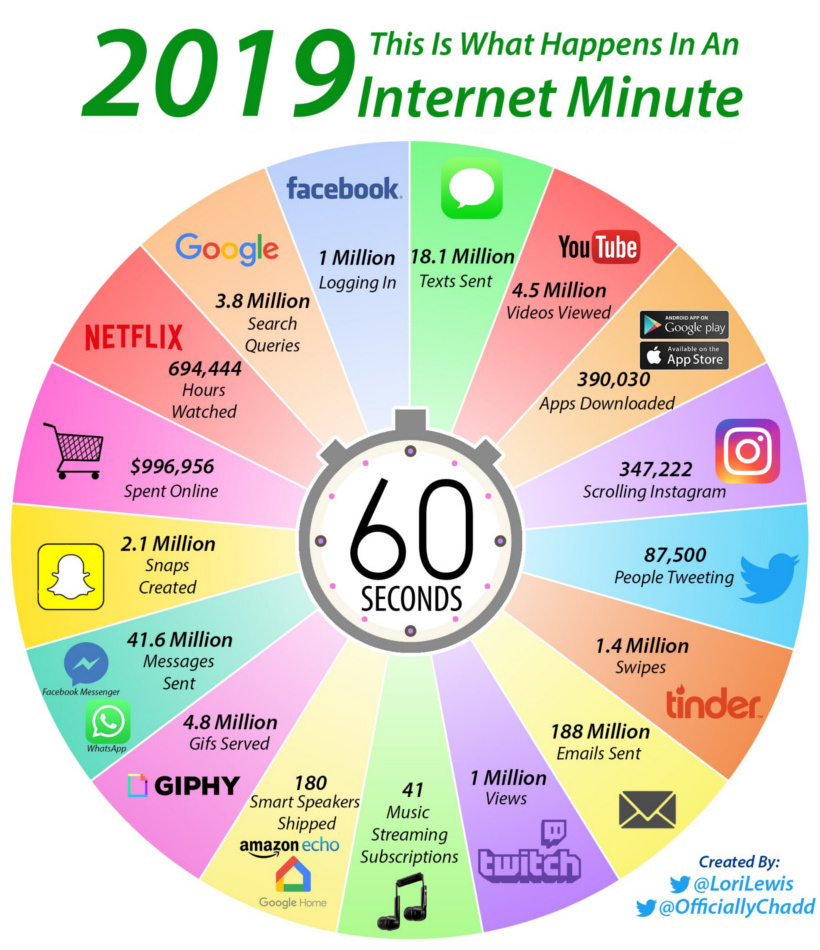
This can be a whole load of exposed information.
Having such a big amount of data exposed online can be posed as a threat due to the lack of privacy. It is natural for consumers to be skeptical about the use of big data as they risk the possibility of their information landing on the wrong hands.
Even if consumers opt to make their information “private”, do they really have the information solely to themselves, or who exactly can have, or rather who else has access to it?
Despite the chances of getting your nude photo leaked, it is still, a sea of data to extract from, much of a hassle than just opening your closet and picking a shirt from it.
I meant a guy’s closet.
Through the forms of text, audio, video, social media and predictive analytics, marketers can tailor their marketing mix specifically for individuals, increasing relevance for their consumers.
Is it then, all for the good?
Probably not.
These automation lacks the emotional understanding and other aspects that technology fail to provide, to accurately decide what consumers really want. Like promoting burgers to an obese, or even promoting a sugar free product to a diabetic patient. Do they really want YOU to know? Do you then, really understand what they want?

Now, the Internet of Things (IoT)

So you’ve seen increasingly smart cars, smart TVs, smart watches and many other gadgets, what about smart people?
Well…

While the IoT(Internet of Things) involves a presence of a variety of devices interacting and cooperating with each other to reach common goals, what do they actually do?
They make your life easier! From the collection of your data through antennas, sensors or micro-controllers, they collate and transfer data through the IoT gateway, then analyze and act accordingly on different platforms. Be it the user interface on your phone, your business applications, or just stored in the back end systems in case you need it some day.

So the question is, does it really improve the living of people?
Yes it does undoubtedly, but there are several drawbacks questioning the direction of such.
It makes people lazy, having the over reliance on these devices.
Need to switch off the TV?
“Hey Google!”
Need some music?
“Hey Google!”
Need to plan your day?
“Hey Google!”
Need a girlfriend?


Well, you get it.
It does make people impatient too, ultimately affecting the values we should cultivate to begin with.
What about health concerns?
An article from Vest Tech explains that not only smartphones and laptops emit radiation. Tablets, earphones, and wearables are included in the list.
They may be small and generally inconspicuous, but these devices work in tandem with your smartphone or laptop, and requires connectivity from your wireless main devices. This means it constantly seeks radio or WiFi signals, consistently emitting radiation. The most worrying thing here is that smartwatches and fitness trackers are meant to be worn on your body, typically on your wrist or around your neck, which means you are always exposed to it.
So if your parents constantly warn you to put away your phone before you sleep…
Let alone wearing them wherever you go.

After optimizing the smaller interfaces for smart watches, consumers now have more power through these devices. Other than faster information retrieval, price comparisons, product reviews, they too, now have the power to pay with these devices.
What about the complications on it?
These devices contains lots of your data, including sensitive information that you may not be very keen to share. Personal information, access to your credit card, access to all your social media accounts. In turn, it makes you an immensely paranoid soul. Congratulations, it now offers probably more value than your wallet.
So be careful the next time you place both your watch and wallet in your gym bag when you head to the shower room.
Just kidding.

Of course, not everyone agrees on following the trend of utilizing such devices, mostly the older age group. These group of people tend to see no “real” benefit as to the ease of convenience such devices can bring. The rapid changes can be too overwhelming for them, hence being left behind over time. This is a concern as it disrupts the cohesion of society.
So do you stand with/against?

Although it’s gonna be hard to kick the habit of shouting “Hey Google!” wherever you go, at least you now have the power to know a day before Thor comes down for the Avengers’ meeting.
Thanks for reading!
 Joseph’s DM Blog
Hi Joseph,
Interesting post you got here! I definitely had a good laugh reading it. The content written is insightful yet captivating. “Be tech savvy, or be sorry” they say. We are living in the age of technology where technology is so advanced and impactful that it affects and transforms the way that we work and live. It was relatively shocking to know the vast amount of data that are being exposed online every minute. Yes I do agree with you that data security is very important as breach of data are becoming more frequent. Something extra for you. Do you know that 77 millions of PlayStation Network accounts were being hacked and the company has an estimated loss of $171 millions?
Looking forward to your future post!
xiny
LikeLiked by 1 person